Introduction: In video services targeting Japanese users, utilizing Japan’s native IP address, TVer, to improve the loading speed and stability of the video platform is at the core of technical optimization and geo-strategic strategies. This article provides practical and compliant optimization suggestions, covering both SEO and user experience, from theory to application.
Japanese original IP These refer to address ranges that are actually assigned to Japanese networks and have a direct impact on local routing, latency, and bandwidth. As a typical Japanese video distribution scenario, TVer places emphasis on localized traffic handling. Combining native Japanese IPs with platform integration strategies can significantly improve loading performance and user experience within a particular region.
Localized optimizations directly reduce the time to first render and the buffering rate by minimizing cross-border links, reducing the number of hops, and optimizing routing paths. It has a positive impact on both search engines and the local user experience. Using native Japanese IPs can improve page loading speeds, video playback times, and overall stability, thereby enhancing user retention rates and conversion rates.
By deploying edge nodes within Japan or selecting a CDN service with a POP location in Japan, it is possible to distribute traffic more locally. Caching media resources in tiers, with popular content stored on edge nodes in Japan and less frequently accessed content kept in central storage, allows for a balance between cost and performance while reducing the load on the origin servers.
Set Cache-Control, Expires, and Etag appropriately to ensure that static resources are cached for an extended period of time, while dynamic streaming content is fetched from the origin server on demand. For segmented videos, using long-term segment caching and enabling segmented origin-pull throttling can not only reduce latency but also improve stability and bandwidth utilization.
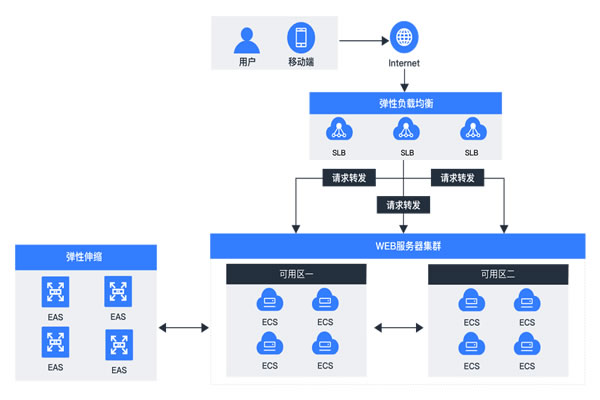
Using proximity-based resolution and Anycast DNS ensures that Japanese users are directed to the nearest edge node. By combining DNS policies with the connectivity of Japanese ISPs, it is possible to reduce resolution times and error rates. Failover is implemented in conjunction with health checks to ensure the stability and availability of resolution services.
Enabling TCP fast opening, optimizing congestion control algorithms, and using HTTP/2 or HTTP/3 can reduce handshake times and the overhead associated with establishing multiple concurrent connections. Optimizing MSS, keep-alive mechanisms, and TLS session reuse for the Japanese internet environment can help improve the loading speed of small files and the first frame of content.
By using Adaptive Bitrate Streaming and setting a reasonable initial buffering strategy based on the bandwidth distribution in Japan, continuous playback can be ensured even during network fluctuations. Adjust the player’s prefetching, buffering thresholds, and reconnection logic to balance both playback speed and stability, while avoiding frequent switching between different streams.
Establish monitoring probes across the Japanese region to track key indicators such as DNS resolution, TCP handshake times, first-byte times, and buffer utilization rates. Bind these metrics to SLAs and configure multi-level alerts and automated recovery strategies to ensure that issues can be quickly identified and resolved when they occur.
When using native Japanese IPs and local caching, comply with local data protection and traffic compliance requirements. It is necessary to anonymize user IP addresses, log data, and session information, as well as minimize the amount of this data stored. Users should be clearly informed of these practices, and legitimate authorization should be obtained whenever required, in order to avoid legal and trust-related risks.
Combining performance improvements for the Japanese-native IP Tver with SEO strategies: Accelerating page loading times, optimizing structured data, and localizing content tags can help improve visibility in Japanese search engines. By geolocating Sitemaps and providing content in local languages, the quality of local traffic and conversion rates can be improved.
Summary and Recommendations: The comprehensive deployment of Japanese edge nodes, optimization of DNS/transport protocols, proper configuration of caching and ABR mechanisms, as well as the establishment of robust monitoring and compliance processes, are all key factors in utilizing Japan-based native IP addresses to enhance the loading speed and stability of video platforms. It is recommended to implement this in phases, starting with monitoring and small-scale node validation, and gradually expanding the scope to ensure the best balance between performance and cost.
- Latest articles
- The Leasing Terms And Exemptions Of The Hong Kong Station Cluster Must Be Verified Before Signing The Contract
- Affordable U.S. High-defense Server Operation And Maintenance Strategy Includes Automation And Cost Optimization Methods For Monitoring
- How SMEs Can Choose Vietnam Site Cluster Servers: Cost-performance And Technical Support Evaluation
- When Choosing A Xingtai VPS Hong Kong Server, You Need To Evaluate The Quality Of Service And After-sales Standards
- How To Determine Which US Server Hosting Provider Is Best Suited Through Trials And Speed Tests
- FAQ Collection: Infinite Rule + Thailand Server Disconnection And Lag Solutions
- Guide: How Chinese Users Can Handle Cross-border Latency And Login Issues On Korean Servers
- Recommended Operations And Monitoring Tools For Purchasing Cloud Servers In Thailand
- What To Do If A Hong Kong Data Center Goes Down, Quickly Pinpoint The Cause And Activate Backup Measures
- Comparing The Advantages And Disadvantages Of Singapore Cloud Server VPS Versus Dedicated Servers Helps You Make A Choice
- Popular tags
-

How To Set A Japanese Native Ip On An Ios Device
this article details the steps on how to set up a japanese native ip on ios devices to help users achieve a smoother network experience. -

A Summary Of The Compatibility And Adaptation Settings Of Different Platforms For Watching Live Broadcasts With Japanese Native Ip
this article summarizes the compatibility differences and common identification mechanisms of japanese native ips for different platforms when watching live broadcasts, and provides suggestions for network layer and client adaptation settings as well as compliance and privacy tips to facilitate operations and personal optimization of the viewing experience. -

How To Fill In The Japanese Pptp Server Address To Ensure A Stable Connection
this article will introduce in detail how to fill in the japanese pptp server address to ensure a stable connection, including steps, precautions, and faqs.